Food seems like a simple subject, but it’s easy to underestimate how much the world has changed since the Early Bronze Age.
The land itself was different. Southeast Arabia was still somewhat wetter than it is today, with more permanent water in its valleys. It wasn’t lush, but it held more life, a little like the wadis and mountains of the region in winter now.
It was also a world without chickens, which hadn’t yet reached Arabia. Cattle, sheep and goats were all there, and the sea was full of food. But working out what people ate is hard when they left no writing of their own.
To stay as close to history as I could, I came at the question from two sides: the ecology of the region and the archaeological evidence. The animals of the sea haven’t changed much. What has changed is what people farmed and what they hunted.
The best evidence turned out to be bones, which make a surprisingly good diet diary. Margarethe and Hans-Peter Uerpmann compared animal remains from four Early Bronze Age sites in the UAE and Oman, and the coast and the interior could hardly look more different.
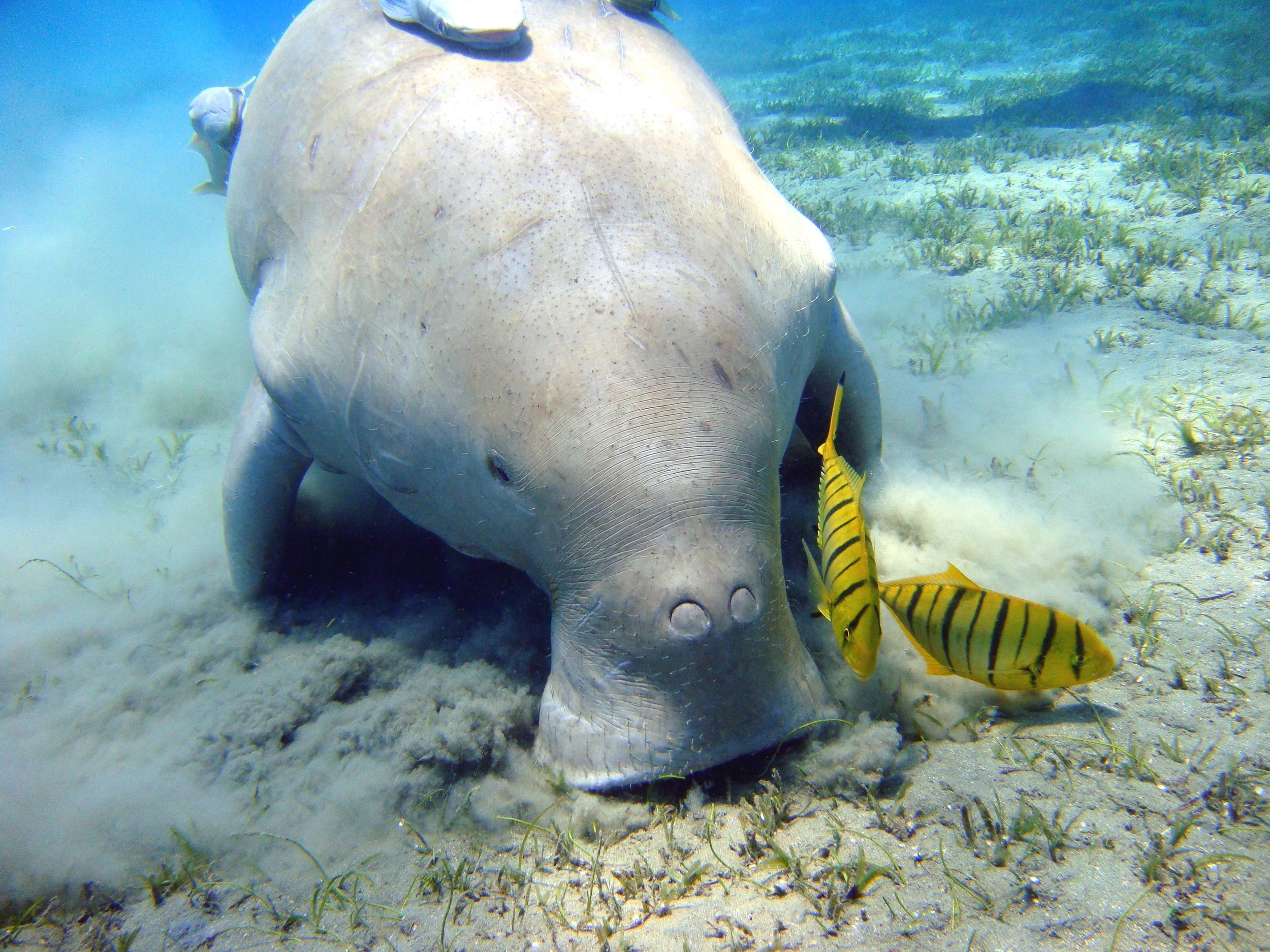
At Umm an-Nar, the island off Abu Dhabi that gave the whole period its name, more than 90 percent of the bones by weight came from sea animals, mostly dugong. At Ra’s al-Jinz in Oman, it was turtle. Inland, at Hili and Maysar, almost everything came from livestock: cattle in the UAE, sheep and goats in Oman. At Hili, cattle seem to have pulled ploughs.
The detail I keep coming back to: camel bones turn up often at Umm an-Nar, but the authors see no sign that the dromedary had been domesticated yet. Four and a half thousand years ago, the camel on this coast was still a wild animal.
So camel was on the menu too, as game. Wild dromedaries were big animals, larger than today’s camels, and they must have been prized quarry. Drive across the UAE today and you’ll still see camels roaming the desert, but they’re all domestic now. The wild dromedary died out in Arabia around the end of the Bronze Age.
Dugong are protected in the Gulf today, so it’s hard to imagine them as food. I wanted to know what they tasted like, so I looked at modern accounts. People who eat dugong describe it as closer to beef than fish, with layers of meat and fat like pork belly. Dugong graze on seagrass rather than eating fish, so the meat lacks the fishy taste of most seafood. Indigenous communities in northern Australia and the Torres Strait still hunt them, but in the Gulf the practice has died out. As recently as the 1980s, dugong meat was still sold at the Abu Dhabi fish market.
One last tangent: while researching this, I came across depictions of a rider on a horse-like animal. Horses hadn’t reached Arabia yet, so it was most likely a large donkey or wild ass. That surprised me. Donkeys were mainly beasts of burden at the time, and riding them was thought to be rare this early, even in Mesopotamia. In Arabia, at least, people may already have been riding them.
Sources:
(1) Margarethe Uerpmann and Hans-Peter Uerpmann, “Animal economy during the Early Bronze Age in South-East Arabia,” in Archaeozoology of the Near East VIII (Lyon, 2008).
(2) J. Swerida et al., “Cultural and human ecological resilience at Early Bronze Age Bat,” Open Quaternary 10 (2024).
(3) A. Curci, M. Carletti and M. Tosi, “The camel remains from site HD-6 (Ra’s al-Hadd, Sultanate of Oman): an opportunity for a critical review of dromedary findings in eastern Arabia,” Anthropozoologica 49, no. 2 (2014).
(4) C. Clarke and S. M. Alsharif, “The lost large mammals of Arabia,” Journal of Biogeography (2025).
(5) M. J. Beech, “Mermaids of the Arabian Gulf: archaeological evidence for the exploitation of dugongs from prehistory to the present,” Liwa 2, no. 3 (2010).
(6) B. Pabai, “Dugong steaks,” SBS Food (2023).
(7) Photo: Julien Willem, CC BY-SA 3.0, via Wikimedia Commons
