Thousands of years ago, people on Marawah Island, off the coast of Abu Dhabi, were already building in stone.
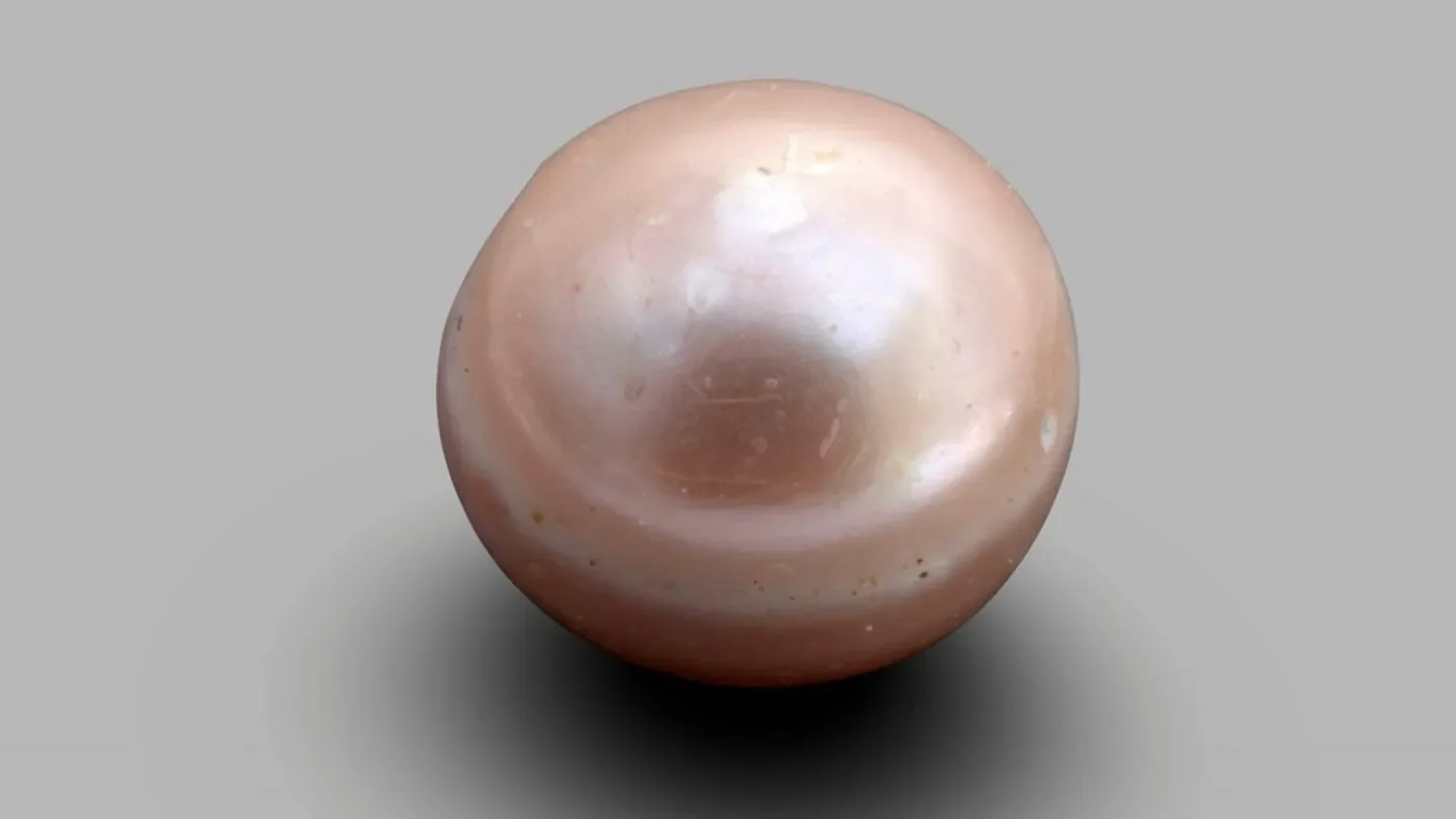
Excavations at a site called MR11 have uncovered a Neolithic village on a rocky platform at the western end of the island, lived in from the early sixth millennium to the mid-fifth millennium BC. So far the team has found a three-part house, a partial structure and a row of at least five more rooms. The finds also include some of the earliest evidence for pearling anywhere in the Gulf.
Pearling is usually told as the story of the last few centuries: the dhows and the divers before oil. Marawah suggests people in these waters were diving for pearls nearly 8,000 years ago.
The waters of the Gulf have always been rich in pearls, and pearls seem to have been among the region’s very first exports. There is evidence that as far back as the Neolithic, pearls were traded around the Gulf, both as goods and as a store of wealth for the people who lived here.
We don’t know exactly how people dived for pearls back then, but it’s a fair guess that the method barely changed until the twentieth century: a diver weighted with a stone and tied to a rope, gathering oysters from the shallow seabed by hand. The main difference would have been the boats. The pearling boats of the twentieth century were built of timber, while the earliest were probably made of reeds and bitumen.
I find it fascinating that a skill could survive in one region for millennia, almost unchanged, until the modern world ended it. Anyone who knows the history of the Gulf states will know that pearling was the backbone of their economies until the 1930s, when Japanese cultured pearls flooded the market and the industry collapsed.
Gulf pearls were among the finest natural pearls in the world. In 1912, Jacques Cartier traveled to Bahrain to buy them for the family firm, and many of Cartier’s most famous pearls came from these waters.
Sources:
(1) R. Cuttler, M. Beech et al., “Excavations at MR11 on Marawah Island (Abu Dhabi, UAE): new insight into the architecture and planning of Arabian Neolithic settlements and early evidence for pearling,” Arabian Archaeology and Epigraphy (2019).
(2) R. Carter, “The history and prehistory of pearling in the Persian Gulf,” Journal of the Economic and Social History of the Orient 48, no. 2 (2005).
(3) R. Carter, “Pearl fishing and globalisation: from the Neolithic to the twentieth century CE,” in The Gulf in World History, ed. A. J. Fromherz (Edinburgh, 2018).
(4) N. Boivin and D. Q. Fuller, “Shell middens, ships and seeds: exploring coastal subsistence, maritime trade and the dispersal of domesticates in and around the ancient Arabian Peninsula,” Journal of World Prehistory 22, no. 2 (2009).
(5) A. De Waele, “The beads of ed-Dur (Umm al-Qaiwain, UAE),” Proceedings of the Seminar for Arabian Studies 37 (2007).
(6) R. Talass, “How a trip to Bahrain spelled success for French luxury brand Cartier,” Arab News (2022).
(7) Photo: The Marawah pearl, found in layers dated to 5800–5600 BC. Department of Culture and Tourism – Abu Dhabi, via AETOSWire (2019).
